
An epic was originally defined as a "long, narrative poem that recounts the deeds of a hero and represents the values of a particular civilization of culture"
Some of the greatest epics in history are;
The Odyssey - Attributed to Homer
The Iliad - Attributed to Homer
The Aeniad - Vergil
Epics, of course, have epic heroes in them. But an epic hero could also be in a story that isn't an epic.
Anyway, I was reading through the classifications that is needed for a character to be classed as an epic hero, and as I read through them all, one particular character of a series came to my mind; The Doctor from Doctor Who.
At the end of this unit study on epics, I had to choose one of five writing assignments. I chose number 4;
'Have you read any books or seen any movies that portray an epic hero? Write a paper telling how this hero fits some, or all, of the qualifications as an epic hero.'
Of course, Doctor Who is a series (although there is a movie and books!), but I figured that was close enough... anyway.. here's my essay (apologies for any spoilers etc. in the second to last paragraph [the one with 'The Eleventh Doctor' next to it] for those of you who haven't, but plan to, see Doctor Who.)
The Doctor: An Epic Hero
By
Helena
08 / August / 2012
What is an epic hero? He is not necessarily the main
character of a story. Epic in the modern day society means large,
or massive. In the early days of poetry, however, an epic was an extensive,
narrative poem that recounted the deeds of a hero and represented the values of
a civilization or culture. Being classified as an epic hero in these poems
meant that he (or she) had to pass certain qualities:
- The epic hero is often of super-human origin
- The epic hero is favoured by the gods
- The epic hero performs super-human feats of strength and endurance
- The epic hero must have previously proven his courage in battle
- The epic hero is of national or universal importance and will hold the fate of a nation, civilization, or world in his hands
- The epic hero represents the values of his age (culture)
- The epic hero will usually take a journey to the underworld in order to accomplish his goal
 |
| The First Doctor |
In BBC’s TV series, Doctor Who, The Doctor, who happens to
be the main character, is an excellent example of a modern epic hero; he has
mostly passed all of the above qualities. The Doctor, however, has not gone to
the underworld, but he has gone to some pretty dangerous places to accomplish
his goals!
 |
| The Second Doctor |
 |
| The Fourth Doctor |
 |
| Dalek Invasion Fleet |
The ability to bear prolonged
hardship: the ability or power to bear prolonged exertion, pain, or hardship2
 |
| Daleks |
To stop The Last
Great Time War3, and the destruction of everything in the universe,
The Doctor destroyed the ten million dalek ships. The explosions and
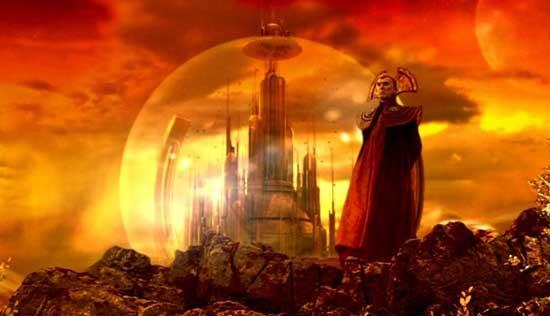
burning resulted in the destruction of his own planet, Gallifrey, which
was put into a ‘time lock’ – nobody could go in or out; it was frozen in time.
For many years, he had to learn to live with the fact that he is the last Time
Lord. The rest of his race was gone, however, because of that one act. While he may have felt torn, he knows that what he did was necessary. Thus, the
obviously has the ability to bear prolonged hardship. This also shows another
quality that the Doctor has, which portrays him as an epic hero; the feature to
have courage in battle. Performing the act of destroying his whole race,
his family, to end a war shows that The Doctor must, indeed, have an enormous
amount of courage.
In nearly every
episode, or series of episodes, of this fantastic television show, The Doctor
saves:
- The Earth
- Humans
- An alien species
- Another planet
- A combination of two or more from the options above
 |
| The Sixth Doctor |
Thus, he shows another
feature of an epic hero; they are of national or universal importance, and hold
the fate of a nation, civilization, or world in their hands. When he
protects the humans and/or aliens, he is defending their nation(s) and/or their
civilization(s). The Doctor holds the fate of entire planets in his hand, and
he protects them, showing that he does, indeed, have this quality of an epic
hero.
 |
| The Tenth Doctor |
An epic hero
represents the value of his age.
The hero must represent the culture
he has come from, in the Doctor’s case, Gallifrey, the home of the Time Lords.
This ancient race values knowledge, they must have knowledge in order to keep
time and space in order. Constantly learning, The Doctor, in all of his
adventures, keeps this value true.
 |
| The Eleventh Doctor |
Although The Doctor has not
gone into ‘The Underworld’, in one of the latest Doctor’s episodes he does go
into a time crack in order to save the universe. Doing this act meant that
he wiped himself from history. He never existed. Because this is not a
desirable place to be, this can, in a way, represent The Underworld. By
going through the crack, he accomplished his goal; he prevented the destruction
of everything that ever existed and everything that ever will.
 |
| The Doctor's Time Machine The TARDIS Time And Relative Dimensions In Space |
The
Doctor passes every trait that he needs to be an epic hero. He is a
super-human, and the favoured one at that. While he defends the
world, he is practicing his endurance to live with the loss of his species. He has proved his bravery. Representing the values of his age, he is
constantly learning and working to save mankind. To accomplish his goal,
saving the universe, he went through a time crack, which wipes him from
existence. He has therefore shown every one of the nine characteristics he
needs. Truly, The Doctor is an epic hero!
______
Footnotes
1
Wikipedia – Superhuman - http://en.wikipedia.org/wiki/Super-human
2
Microsoft® Encarta® 2006 – Encarta Dictionary Tools - Endurance
 |
| A Time Lord On Gallifrey |


